


In today’s global economic landscape—marked by volatility and uncertainty—wealth preservation and certainty have become top priorities for Ultra High Net Worth Individuals (UHNW) and Family Offices.
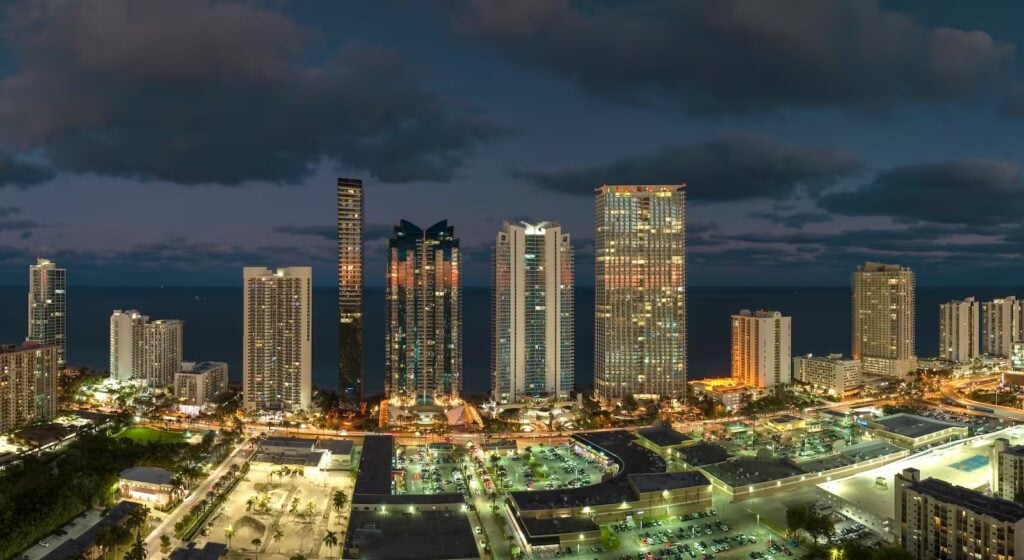
ARCSA Capital is not merely an investment firm offering target returns. Our investment thesis is rooted in value creation through distressed residential real estate assets. This institutionalized strategy, focused on strategic areas of Florida, not only generates superior returns, but also delivers a level of target-return discipline and protection against market fluctuations that individual investors simply cannot replicate.
Below, we outline how we turn the distressed property cycle into the foundation of our core value proposition: Real Estate Target Returns with a 21% Annual Target Return.
Institutional real estate investment strategy.

Contents
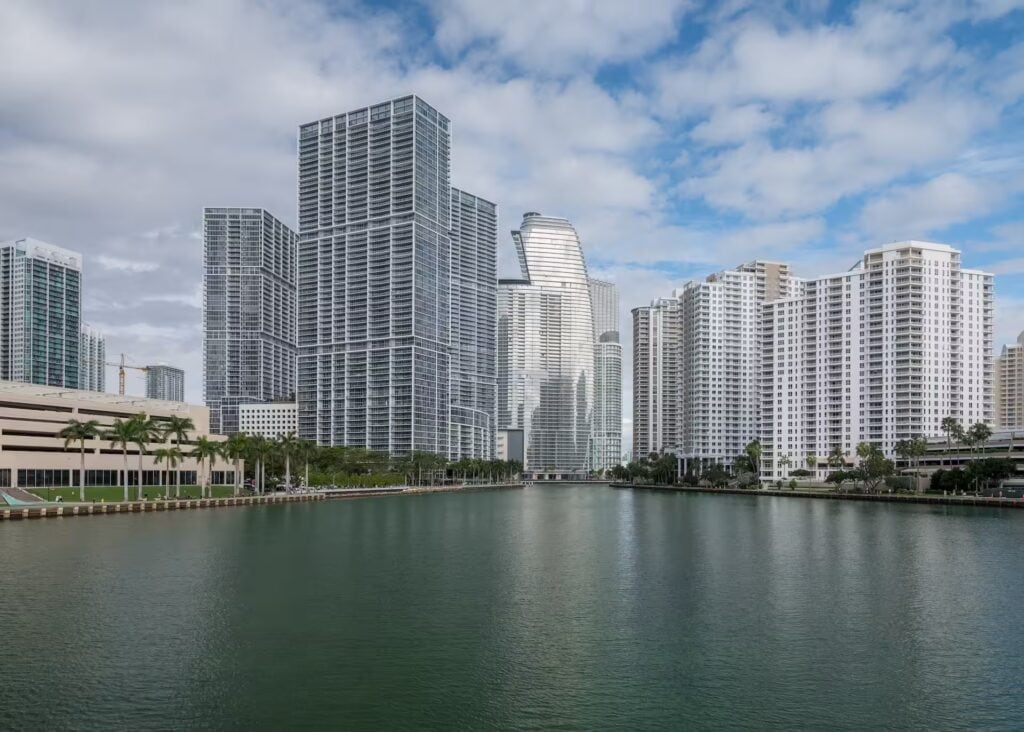
I. The Distressed Asset Opportunity: Where Others See Risk, We Create Value
Experienced real estate investors know that profit is made at acquisition, not at sale. Properties in Florida within the distressed asset cycle—whether in preforeclosure, foreclosure, or auction—are often acquired below market value due to the financial or personal hardship of the seller.
Our operation benefits from a distinct Geographic Advantage. We operate exclusively in the Florida market, which has experienced a sustained real estate boom for over seven consecutive years. With the highest job growth in the U.S. and consistent legal immigration, housing demand outpaces supply—creating an ideal environment for our value-engineering strategy.

We analyze and capitalize on three critical acquisition stages:
- Preforeclosure: At this stage, the homeowner is behind on payments, but the property hasn’t yet been scheduled for auction. Purchasing here allows ARCSA to negotiate directly and mitigate competition, securing the asset at wholesale pricing.
- Foreclosure: Once the foreclosure notice is filed and published, the property enters judicial process. Expert legal navigation is key to confidently secure the asset at this point.
- Auction / Judicial Sale: Though these auctions are technically public, successful acquisitions require liquidity, speed, and exhaustive due diligence—all of which ARCSA executes through its institutional structure.
General partner operational discipline.

II. Institutional Strength: Shielding Investors from Retail Fix & Flip Risk
High-net-worth investors seeking diversification understand the operational and financial risks that plague the retail Fix & Flip (F&F) space. ARCSA Capital’s model is designed to eliminate execution risk and administrative uncertainty.
Institutional investment thesis and operating model.

1. Eliminating the Contractor Nightmare
One of the greatest frustrations in retail F&F is the unreliability of contractors, poor workmanship, unexpected cost overruns, and the investor being forced to act as a full-time general contractor.
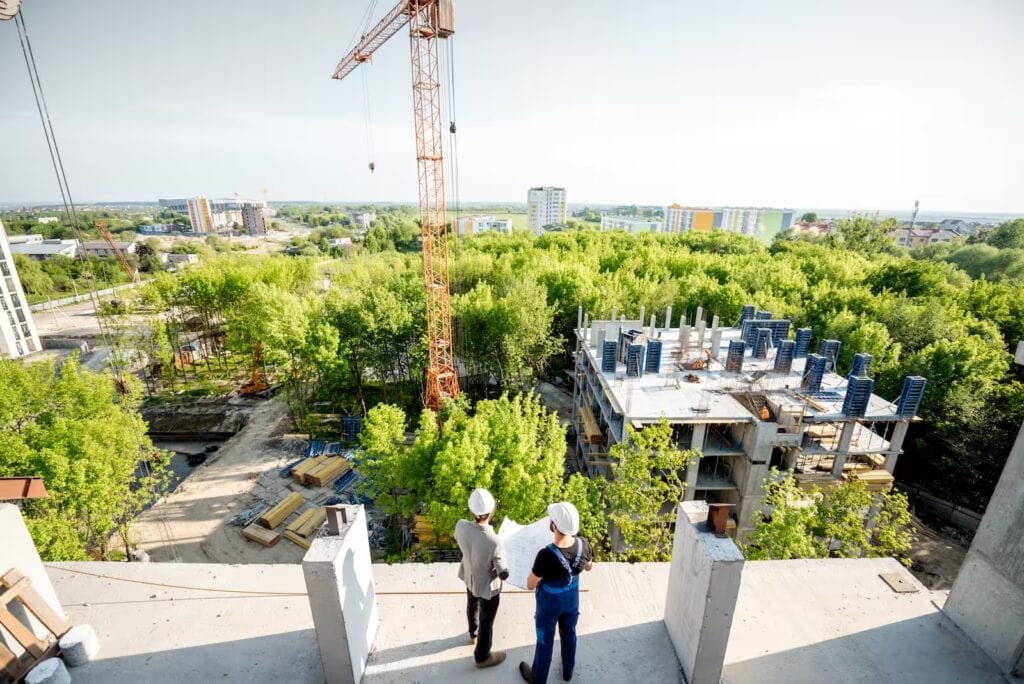
- ARCSA Solution: Our model is fully institutionalized. We act as an Institutional Construction Manager (GC), removing the most volatile human risk factor from the equation. With complete operational control—from acquisition to resale—we ensure quality and deadlines are met, delivering projects within the promised 2 to 3-month window.
2. Full Transparency vs. Hidden Fees
Retail investors frequently face lenders who impose tightening conditions and hidden fees, generating anxiety and mistrust.
- ARCSA Solution: We provide full transparency. Our cost structure clearly lists all fees that are often hidden elsewhere, including Origination Points (2.0%) and Construction Management Fees (15%). Through our Transparent Return Simulator, embedded in our digital strategy, we actively demonstrate how we mitigate cost-related risks and rebuild investor trust.
Fee Structure Comparison
Retail Anxiety vs. Institutional Certainty
Undisclosed costs
Fixed Rate
No hidden markups
Full Disclosure

3. Target returns: Target Returns and How They Are Modelled
Institutional investors and Family Offices seek stable returns to diversify portfolios and hedge against inflation. Volatility is their greatest concern.
- ARCSA Solution: With full operational control and a refined investment formula, we know exactly how much is acquired, how much will be reinvested in value-engineering, and for how much it will be sold. This allows us to offer a Target annual return of 21%, functioning as true Real Estate Target Returns, fully independent of the stock market or economic crises.
Fiduciary-grade real estate strategies.

Considering Foreclosure Exposure Without the Operational Burden?
ARCSA Capital underwrites, acquires and repositions distressed South Florida assets with institutional title, construction and reporting controls at every stage.
Request InformationIII. ARCSA Capital’s Exclusive Circle (The VAL Protocol)
ARCSA Capital is not a mass-market option—we deliver absolute exclusivity. Our institutional structure is built for operational discipline and exclusivity:
- Regulatory Structure: We operate under a Regulation D, Rule 506(c) exemption from SEC registration and report to the IRS through corporate tax structures. Our operations are backed by top-tier custodial banks such as Chase Bank and Bank of America, with independent external auditors ensuring compliance with anti-money laundering and tax review standards.
- Selective Access: We have implemented a “Conceptual Red Rope” framework—ARCSA selects its investors. Access to our Institutional Data Room and professional due diligence is restricted to deals ranging from $5M to $10M minimum.
- Strategic Partnership Positioning: We elevate our investors from simple capital contributors to strategic partners in a success narrative they’re proud to share within elite circles.
Strategic framework for navigating foreclosure cycles.
Investing in ARCSA Capital’s distressed asset thesis is the most rigorous, transparent, and exclusive way to build real wealth in Florida’s dynamic and protected real estate market. | Apply to ARCSA’s Exclusive Circle
Risk-adjusted real estate strategies for family offices.

Strategic Question:
What makes distressed real estate assets in Florida an attractive investment opportunity?
Distressed real estate assets in Florida are often sold below market value due to financial or legal pressure on the owners, allowing institutional investors to acquire them at wholesale prices and generate significant returns through value reengineering and resale.
Why is the preforeclosure phase particularly strategic for investors like ARCSA Capital?
The preforeclosure stage allows for direct negotiation with homeowners before public auction notices, which reduces competition, improves acquisition conditions, and increases control over pricing and legal certainty.
How does ARCSA Capital ensure legal and operational security during a foreclosure acquisition?
ARCSA Capital navigates the judicial foreclosure process with in-house legal expertise and institutional due diligence, ensuring every acquisition complies with legal frameworks and minimizes exposure to litigation or administrative complications.
Why do public real estate auctions require institutional muscle to succeed?
Although open to the public, judicial auctions are highly competitive and require immediate liquidity, legal preparedness, and the ability to execute swift due diligence—capabilities that only a structured institutional fund can provide consistently.
What are the main risks of retail Fix & Flip models that ARCSA eliminates?
Retail investors often face unreliable contractors, cost overruns, and delays. ARCSA removes these variables by operating as an Institutional Construction Manager, ensuring full control over execution timelines and build quality.
How does ARCSA Capital offer Target income through real estate?
By owning every step of the investment cycle—from acquisition to renovation and resale—ARCSA creates modelled cash flow, enabling it to offer a Target 21% annual return, structured as a a real estate target return product.
What is meant by “Conceptual Red Rope” in ARCSA’s investor model?
This refers to ARCSA’s selective access policy, where only qualified institutional or accredited investors are allowed into the fund, reinforcing the firm’s exclusivity, credibility, and alignment with high-net-worth standards.
How does ARCSA maintain transparency in its investment process?
The firm openly discloses all fees—including origination points and construction management costs—and offers a Transparent Return Simulator that illustrates all projected costs and earnings, rebuilding investor confidence and trust.
Why is Florida the geographic focus of ARCSA’s distressed asset strategy?
Florida’s real estate market has experienced over seven years of sustained growth, driven by legal immigration and job creation, which results in high housing demand and ideal conditions for flipping undervalued assets at a premium.
What type of investor is best suited for ARCSA Capital’s model?
Ultra High Net Worth Individuals, Family Offices, and institutional investors seeking Target, inflation-resistant returns and legal shielding are the ideal partners for ARCSA’s rigorously structured and risk-mitigated investment thesis.

Does your current investment strategy offer the operational certainty, legal shielding, and target return that only an institutional model like ours can pursue with this level of discipline?
Before choosing your first property or retirement vehicle, it is critical to understand how institutional investors structure risk, cash flow, and downside protection.
For readers who want to move from theory to an institutional framework, we recommend our
institutional real estate investment strategy guide for Miami 2026 .
Foreclosure: 7 Points at a Glance
Foreclosure investing rewards discipline, not enthusiasm. The seven points below summarize how ARCSA Capital underwrites, acquires and repositions foreclosure assets in South Florida, and what separates an institutional foreclosure program from a retail fix-and-flip operation.
- Title first, price second. Every foreclosure candidate is cleared through a full title search before a bid is authorized. Unpaid HOA dues, municipal liens and junior mortgages are priced into the entry, never discovered after closing.
- Preforeclosure is where margin lives. Negotiating with an owner already in default, before the auction gavel falls, consistently produces a better basis than competing on the courthouse steps.
- Auction discipline. A maximum bid is set in committee and never revised on the floor. Revising it live is the single most common way retail investors destroy a foreclosure return.
- Capital is committed, not raised. Florida clerks require certified funds within 24 hours of the sale, so a vehicle that has to call capital cannot participate in a foreclosure auction credibly.
- Renovation is contracted, not improvised. Scope, schedule and penalties are fixed with the general contractor before the foreclosure asset is acquired.
- Every exit is modeled at three price points. Base, downside and stress cases are run on each foreclosure acquisition, with a rental fallback if the resale window closes.
- Reporting is quarterly and auditable. Investors see the full cost stack of each foreclosure asset, not a headline return.
None of these controls is exotic. What makes them institutional is that they are mandatory, documented and applied to every foreclosure transaction, regardless of how attractive the asset looks on paper.
What Regulators and Public Filings Reveal About Foreclosure
Public records make the foreclosure cycle unusually transparent for anyone willing to read them. In Florida, lis pendens filings, final judgments and clerk auction calendars are all public, which means the preforeclosure and foreclosure pipeline can be modeled months in advance rather than reacted to.
That transparency cuts both ways. Because the data is public, competition at the auction stage is intense and frequently irrational. The advantage does not come from finding the foreclosure; it comes from having already underwritten it, cleared title and priced the renovation before the hearing date arrives.
Federal housing agencies publish loss-mitigation rules and foreclosure timeline guidance that frame how mortgage servicers must behave before a property ever reaches auction. Understanding that sequence is precisely what allows a disciplined buyer to intervene at the preforeclosure stage instead of bidding blind later.
For the regulatory framework governing loss mitigation and the foreclosure timeline in the United States, the U.S. Department of Housing and Urban Development publishes the servicer obligations and homeowner protections that shape every stage of the process.
Common Mistakes Investors Make With Foreclosure
Most losses in foreclosure investing are self-inflicted. These are the errors the ARCSA Capital process is explicitly designed to prevent.
- Bidding on a foreclosure without a title search. A surviving first mortgage or a code-enforcement lien can quietly exceed the equity in the asset.
- Assuming the property can be inspected. Most foreclosure auction purchases are made sight-unseen, so the renovation reserve has to assume a worst-case interior.
- Ignoring the redemption window. A foreclosure sale is not final until the certificate of title issues, and the clock varies by county.
- Underwriting to the peak of the resale market. A foreclosure return modeled on the highest recent comparable is not a return, it is a hope.
- Treating occupancy as someone else problem. Post-foreclosure eviction has a cost and a calendar, and both belong inside the model.
- Concentration. Three foreclosure assets on the same street is one market bet, not a diversified portfolio.
Each of these mistakes is survivable once. The reason retail foreclosure investors rarely compound is that the same mistakes repeat across every deal, because there is no committee, no checklist and nobody whose job is to say no.
How to Evaluate Foreclosure in 30 Days
Week 1 — Read the public record
Pull the lis pendens filings and the clerk foreclosure auction calendar for your target ZIP codes. Do not bid. The exercise is to learn the volume, the typical judgment amounts and how far winning bids sit above the opening bid.
Week 2 — Price one asset completely
Choose a single foreclosure property and build the entire stack: title search, estimated liens, renovation scope, carry cost, closing and resale costs. Then compare your number with what the asset actually sold for.
Week 3 — Test the operator, not the deal
Ask any sponsor offering foreclosure exposure for their last ten acquisitions with entry basis, all-in cost, exit price and hold period. A sponsor who cannot produce that within a week does not track it.
Week 4 — Decide how you want the risk delivered
A direct foreclosure purchase hands you the return and the operational burden. A fund structure hands you the return net of fees and removes the burden. Both are legitimate; choosing without understanding the trade-off is not.
Frequently Asked Questions About Foreclosure
Is preforeclosure better than buying at the foreclosure auction?
Generally better on basis and worse on certainty. Preforeclosure lets you inspect the property, negotiate directly and resolve title before closing, but most negotiations fail. The auction gives certainty of process and no ability to inspect. An institutional foreclosure program runs both channels at once so the pipeline never depends on a single source.
How much capital does a foreclosure strategy actually require?
In South Florida a single foreclosure acquisition with renovation typically requires certified funds at auction plus a renovation reserve of 15% to 30% of the purchase price. The binding constraint is not the total amount, it is the speed: Florida clerks require payment within 24 hours of the sale.
What happens if the foreclosure asset does not sell?
It becomes a rental. Every ARCSA Capital foreclosure underwriting includes a rental fallback with a modeled debt service coverage ratio, and that is what converts a failed resale from a loss into a lower, slower return.
Key Takeaways on Foreclosure
- Foreclosure returns are made at acquisition, not at resale. The entry basis is the only variable fully under your control.
- Preforeclosure negotiation and auction bidding are complementary channels, not substitutes for one another.
- Title work, contracted renovation and a rental fallback are what separate an institutional foreclosure program from speculation.
- Public records make the foreclosure pipeline predictable, so the real edge is preparation rather than discovery.
- Ask any sponsor for the last ten completed deals before you ask for the projected return.
ARCSA Capital operates a foreclosure and distressed-asset program in South Florida with institutional title, construction and reporting controls at every stage. If you are evaluating foreclosure exposure for a family office or a qualified investment portfolio, the fastest way to assess fit is to review the underwriting on a live transaction.
Review a Live Foreclosure Underwriting With ARCSA Capital
See the full cost stack, the title findings and the exit model on a current acquisition before you commit capital.
Request InformationOr model your own scenario in the investment simulator
Or receive the ARCSA Capital investment thesis by email, with the entry, stabilisation and exit assumptions behind the strategy:
